
Why choose Rogue?
- Stealth and control create opportunities before the first damaging attack.
- Different weapon and finisher themes support distinct routines.
- Current Assassination includes Mutilate and Venom.
- The official preview expands weapon options and permits poisons alongside temporary weapon enchants.
Tradeoffs
- All three trees remain melee damage rather than tank or healer options.
- Energy, combo points and control require attention beyond pressing every available attack.
- Some builds depend on specific weapons; do not choose them without checking equipment.
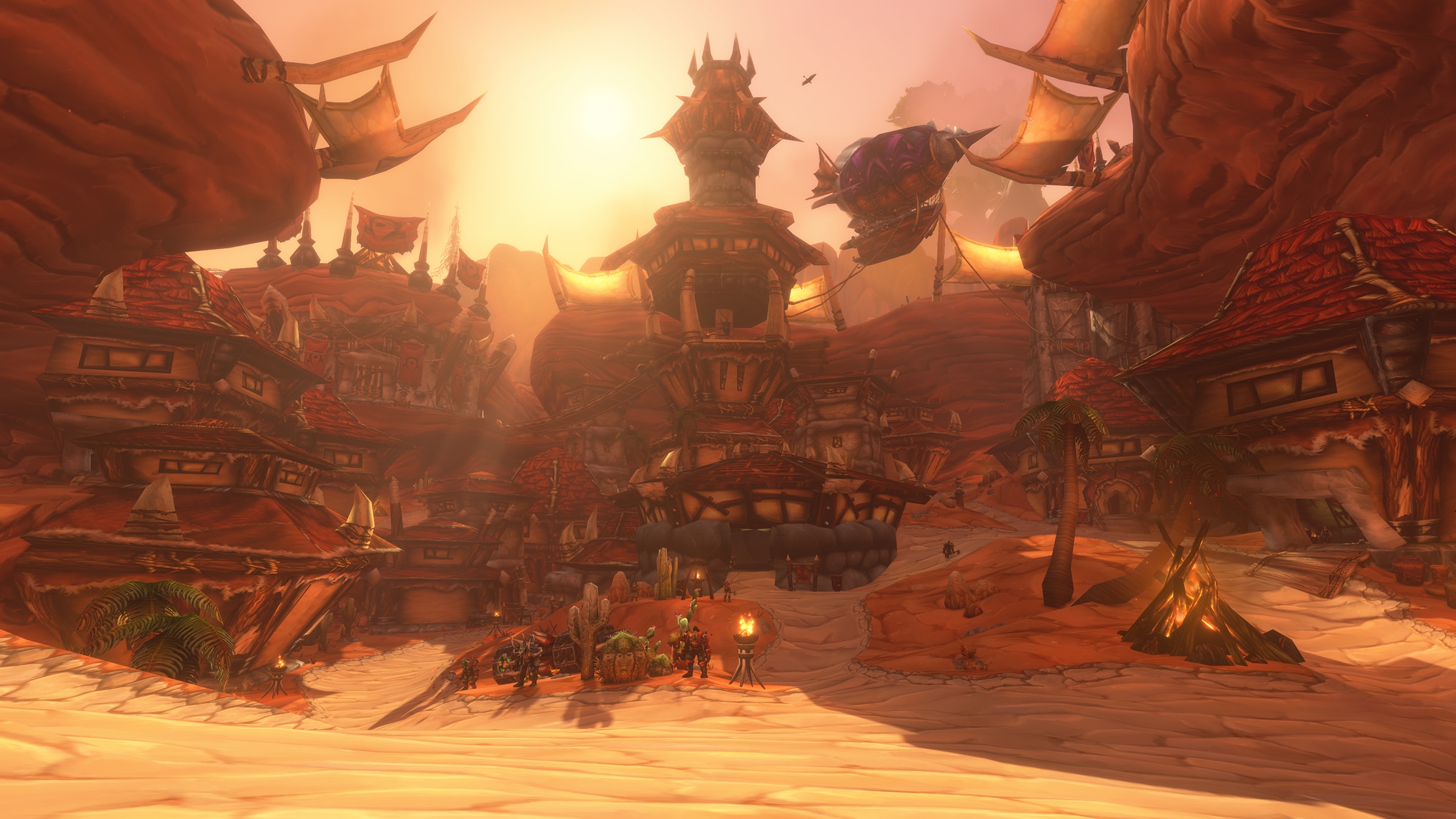
Rogue · Spec
| Spec | Role | Reason |
|---|---|---|
| Assassination | DPS | Daggers, poisons and finisher maintenance. |
| Combat | DPS | Direct weapon damage with flexible weapon talents. |
| Subtlety | DPS | Stealth, bleeds and combat tricks. |
Direct weapon routine
Our starting suggestion for players who want to inspect flexible weapon support.
Dagger and poison play
Choose for Mutilate and poison/finisher interactions, after checking weapon requirements.
Stealth and combat tricks
A fit if setup, control and bleeds are the main attraction.
Talent location map
Original diagram of the reference trees. Locations and prerequisites are shown; this is not a recommended purchase order. Talent names follow the English export.

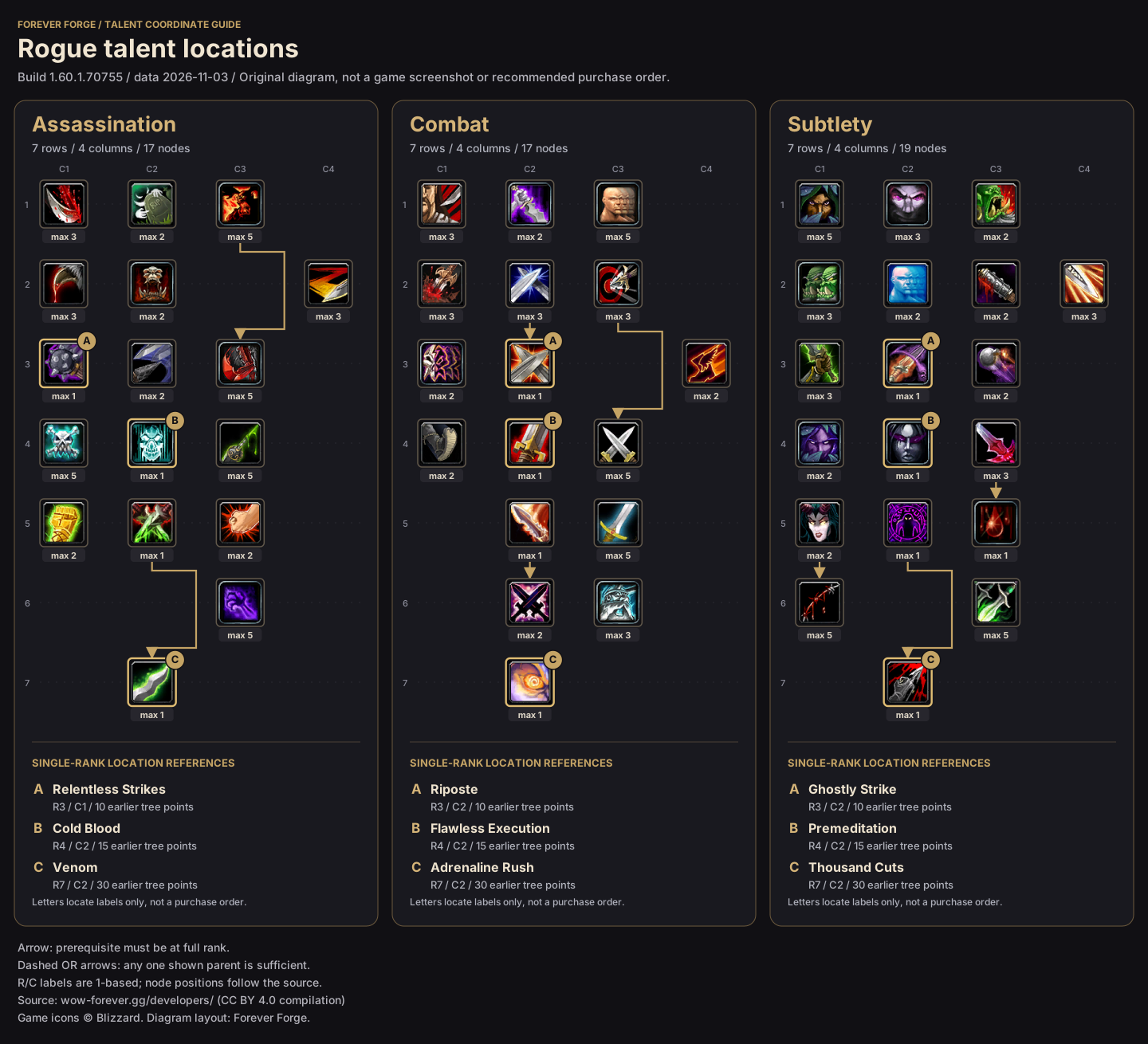
WoW Forever Rogue Guide · Leveling
Make the opening deliberate
- Check the target and nearby enemies before leaving Stealth.
- Keep an escape or control option available for an unexpected extra enemy.
Rogue's advantage starts before damage, not only inside a rotation.
Match talents to weapons
- Read a talent's weapon requirement before planning around it.
- Inspect Combat for a direct weapon routine or Assassination for its dagger and poison path.
A named build is ineffective when its required weapon setup is missing.
Coordinate setup and finishers
- Confirm control targets before attacking.
- Use finishers for the job your current build supports, rather than spending points automatically.
A controlled encounter lets melee damage happen safely.
Build around the opportunity you create
Rogue suits a player who likes preparing a fight, selecting a target and changing the odds before normal combat begins. That can be satisfying even when a short damage comparison does not tell the whole story. Stealth is not a promise that every enemy can be skipped safely. Look at nearby movement, the route back and the recovery option you retain if the opening goes wrong.
All three trees are melee damage paths. Assassination asks you to inspect the dagger and poison relationship; Combat is a natural place to compare direct weapon support; Subtlety rewards interest in setup and combat tricks. Choose the routine you can actually equip and enjoy. A tier-list prediction about a raid does not settle whether that routine is comfortable during ordinary solo sessions.
Treat requirements and finishers as real decisions
Before planning toward a milestone, read its equipment condition and the prerequisite chain. Mutilate is a particularly clear example of why a weapon requirement belongs in a practical guide. The planner enforces point rules, but your in-game equipment still has to support the action. A different weapon drop is a reason to compare options, not automatically to discard a build whose purpose remains useful.
Finishers also serve different plans. A point-spending habit learned in one tree can ignore a maintained effect or control decision in another. Read the current talent text, keep your intended task in the saved build's name and explain why you changed a branch. In a party, coordinate control targets and the opening rather than testing an attack on every enemy. Developer design goals and beta commentary remain context; they are not proof of a particular live damage lead.
Common mistakes and how to fix them
Taking a dagger-dependent plan without the required weapons.
Read the current talent requirements before spending toward the milestone.
Breaking an agreed control target for another attack.
Agree the opening and target priority with the party.
Treating a developer damage target as a measured result.
Keep design goals separate from comparable live combat evidence.
Race & class combinations
Tauren cannot be Rogues in the official Forever matrix.
| Alliance | Horde |
|---|---|
| Human, Dwarf, Night Elf, Gnome, Skyborne High Order | Orc, Troll, Undead, Skyborne Windshaper |
Common questions
Can Tauren play Rogue?
No. Tauren are not marked for Rogue in the official Forever race/class matrix.
Are all three Rogue trees damage roles?
Yes. Their weapons, control and finisher priorities differ, but this guide does not classify any as a tank or healer.
Why check weapons before choosing a build?
Some key abilities require specific weapons. A legal talent allocation alone does not guarantee your current equipment can use them.
Which Rogue route should a first melee player inspect?
Combat is our starting suggestion for examining a direct weapon routine. Compare Assassination if daggers and poisons attract you, or Subtlety if setup, bleeds and tricks are the appeal. Check the weapons you can actually use before committing to a milestone.
Why does Mutilate need an equipment check before a talent plan?
The published Rogue design gives Mutilate a dagger requirement. Legal talent points do not make incompatible equipped weapons suitable. Read the current condition, then compare talents for the attacks your available equipment will let you repeat.
How should I recover from a broken Rogue opening?
Identify which control or escape option remains, rather than adding attacks without a target plan. Afterwards distinguish a poor target, an overlooked nearby group and an unfamiliar command. In a party, agree which enemies must remain undamaged before the next attempt.
Sources
- Create the Hero You Want to Be · Checked 2026-11-04
- Rogue and Warlock Class Deep Dives · Checked 2026-11-04
- Talent export: 1.60.1.70755 · Checked 2026-11-04
- Rogue guide (structure reference) · Checked 2026-11-04