
Why choose Priest?
- Two healing approaches plus a ranged damage tree.
- Absorbs allow preventive decisions rather than only repairing damage.
- The current Discipline tree includes Soul Warding and Penance.
- The official preview makes Fear Ward available beyond its old race restriction.
Tradeoffs
- Cloth armor and limited escape options make positioning and ally support important.
- A healer's solo routine and equipment goals may differ from a damage plan.
- A racial choice still has class-specific details; no single old racial rule decides every Priest.
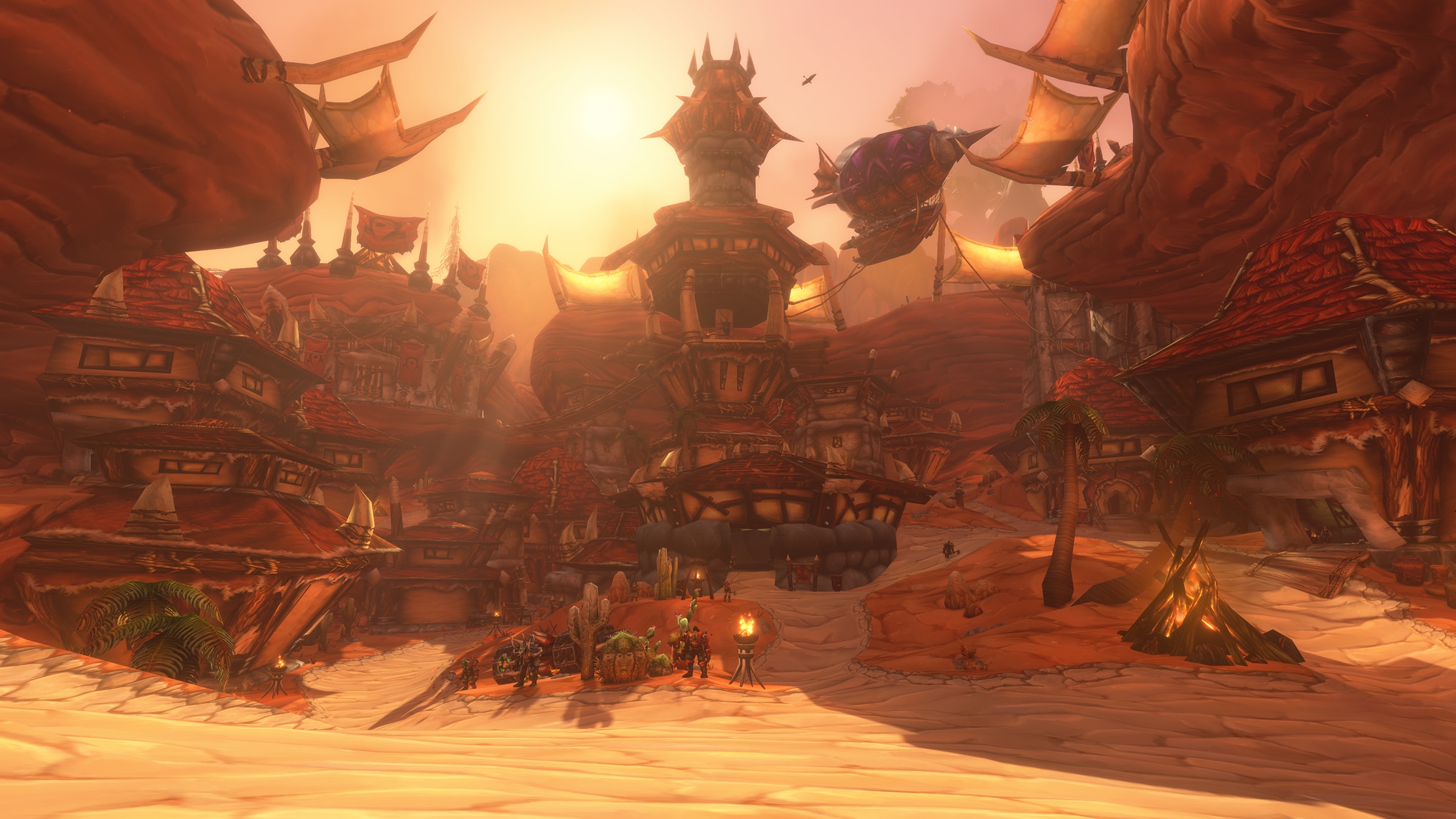
Priest · Spec
| Spec | Role | Reason |
|---|---|---|
| Discipline | Healer | Absorbs, Penance and deliberate prevention. |
| Holy | Healer | A broad healing routine with party recovery choices. |
| Shadow | DPS | Shadow damage and periodic effects. |
Absorb-focused healing
A fit if you enjoy preventing expected damage and managing shield interactions.
Broad healing toolkit
Inspect if you like selecting a response for different party damage patterns.
Ranged Shadow play
Choose the damage routine without treating old raid-utility assumptions as current.
Talent location map
Original diagram of the reference trees. Locations and prerequisites are shown; this is not a recommended purchase order. Talent names follow the English export.

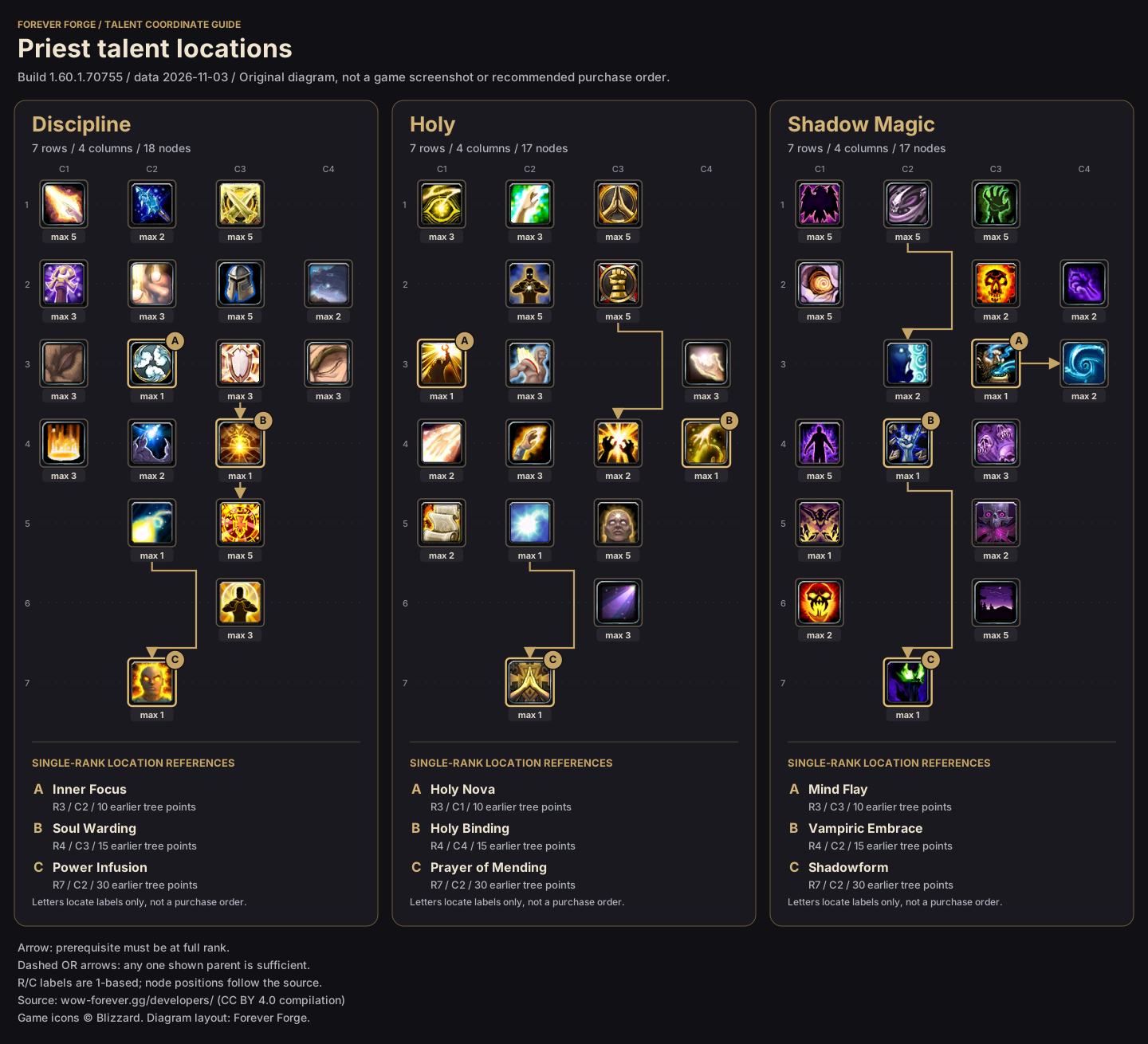
WoW Forever Priest Guide · Leveling
Protect your casting space
- Pull targets into a place where you can finish a cast safely.
- Keep a defensive or healing action ready before your health becomes critical.
A cloth caster benefits from preventing a bad position rather than repeatedly recovering from one.
Pick the primary session
- Inspect Shadow for a damage-first routine or healing trees when grouping regularly.
- Read current damage-support talents before assuming a healing build cannot quest.
The next useful point depends on how much of your session is solo or grouped.
Plan the timing of healing
- Use a prevention plan for expected damage and a recovery plan for damage already taken.
- Watch the target's party when choosing party-oriented healing effects.
The same healing amount can be useful or wasted depending on timing and targeting.
Choose how you want to keep people alive
Priest is attractive when your attention naturally moves between health bars, positioning and the next dangerous event. Discipline and Holy should be compared by the decisions you enjoy, not only by an overall healer ranking. Preventing predictable damage feels different from choosing a recovery spell after a party member is hurt. Shadow provides another direction, but it is a damage role rather than a replacement for a healer who changes their mind mid-pull.
A first Priest also needs a practical solo routine. The guide does not assume that every hour will be spent in a dungeon. Compare the points that support your repeated damage casts with the healing responsibilities you actually accept. Save a named plan for each purpose instead of changing talents because a general list calls one tree better. That makes the compromise visible when friends ask you to group.
Use targeting and timing as part of the build
A talent description cannot decide whether a heal arrives at a useful time. Watch expected damage, the target's position and the group that an effect will reach. The official preview describes wider party-targeting options and new preventive tools, while the current export gives the exact nodes used in this planner. Check both the practical condition and the current prerequisite before making a milestone the center of your plan.
Race choice also deserves a current check. Old recommendations often centered on abilities that were exclusive in Classic. The published Forever matrix adds Gnome Priests, and the class preview changes the availability of Fear Ward. Choose a valid race first, then compare its remaining class-specific utility and your preferred appearance. This guide does not turn that choice into an invented percentage advantage or claim a single universally best Priest.
Common mistakes and how to fix them
Waiting for every target to be nearly defeated before acting.
Plan preventive or periodic effects around expected damage where appropriate.
Copying an old race recommendation based only on Fear Ward.
The official preview grants Fear Ward to all Priests; inspect the remaining racial differences.
Expecting a healing and solo plan to feel identical.
Save separate task plans and compare the spells and equipment each one needs.
Race & class combinations
Gnome Priest is a Forever option. Orc, Tauren and Skyborne are absent from the Priest matrix.
| Alliance | Horde |
|---|---|
| Human, Dwarf, Night Elf, Gnome | Troll, Undead |
Common questions
Can Gnomes be Priests?
Yes. The official Forever matrix includes Gnome Priests.
Is Fear Ward still a reason to use only one race?
The official preview makes Fear Ward available to all Priests. Check other racial details before using an old recommendation.
Is Shadow another healing specialization?
No. We classify Shadow as ranged damage, while Discipline and Holy are healing paths.
How do I choose Discipline or Holy for healing?
Inspect Discipline if preparing absorbs and managing shield interactions appeals to you. Compare Holy when you want a broader set of responses to party damage. Match the timing and targeting demands of your group rather than choosing from an overall healer letter alone.
Should a Priest use the same plan for solo play and group healing?
Not automatically. Compare the damage spells you repeat alone with the healing responsibilities you actually accept. A support-oriented plan may contain useful offensive choices, but save each purpose clearly and keep its equipment and resource needs visible.
What should I check when my Priest healing arrives too late?
Ask when you noticed the risk, whether the target was reachable and whether another player already required your attention. Earlier preparation, better positioning or clearer role assignment may be the answer. A larger heal or a talent reset does not fix every timing problem.
Sources
- Create the Hero You Want to Be · Checked 2026-11-04
- Priest and Warrior Class Deep Dives · Checked 2026-11-04
- Talent export: 1.60.1.70755 · Checked 2026-11-04
- Priest guide (structure reference) · Checked 2026-11-04